




Ferrets and cats are often viewed as unlikely housemates, leaving many owners to wonder whether the smaller mustelid could ever endanger a feline friend. This article looks at whether ferrets can seriously harm cats, outlining typical ferret behavior, the way the two species usually relate, and what current observations suggest about keeping the peace.
The Behavior of Ferrets
Ferrets are petite, meat-eating mammals packed with curiosity and energy. Their bold, mischievous streak can lead to surprising encounters with other pets, cats included. Although ferrets are not born with an inborn hatred of cats, their reactions can be hard to predict, especially if they feel cornered or have not been gently introduced to other animals.
Curiosity and Playfulness
A ferret investigates the world by sniffing, nudging, and sometimes giving playful nips. When a cat is nearby, the ferret may treat the moving tail or darting paws as an irresistible toy. What begins as play can escalate if the cat becomes frightened and lashes out, so supervision is always wise.
Socialization and Temperament
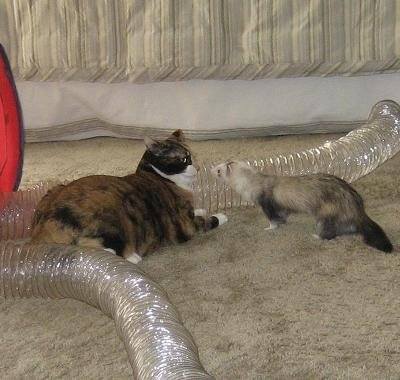
Individual personalities differ widely: some ferrets are laid-back cuddlers, others are feisty explorers. Early, positive exposure to calm cats helps ferrets learn appropriate boundaries. Even well-socialized ferrets can still react defensively if a cat hisses or swats, so gradual introductions remain important throughout their lives.
The Dynamics of Cat-Ferret Relationships
How the two animals get along depends on age, past experience, and the layout of the home. Some cats regard ferrets as entertaining companions; others see them as intruders. Reading body language on both sides is the key to preventing tension.
Curiosity and Friendliness
Cats raised around small, active animals often remain relaxed when a ferret scampers past. In these households, mutual sniffing may turn into joint exploration or parallel napping, and serious conflict is rare.
Wary and Aggressive Cats
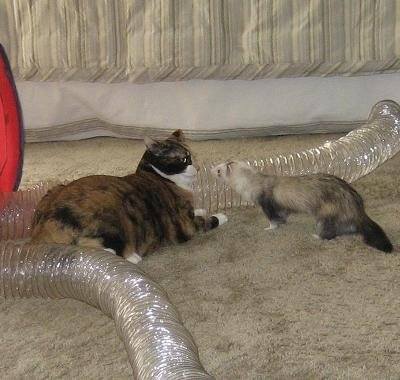
Cats that are naturally timid, elderly, or territorial may respond with growls or bared claws. A startled ferret could answer with a quick nip, triggering a cycle of escalation. In such cases, separate play sessions and safe retreats for each pet reduce stress.
Scientific Research on the Question of Ferrets and Cats
Veterinary case reports and shelter surveys offer practical guidance rather than alarmist headlines. The consensus is that injury risk is low when introductions are slow and the environment is managed.
Study 1: Ferret-Cat Interactions: A Study of Aggression and Socialization
A veterinary behavior survey noted that gradual scent swapping and short, supervised meetings greatly reduced spats. Neutral territory and escape routes for the cat were the most effective calming measures.
Study 2: The Impact of Ferrets on Cat Behavior and Welfare
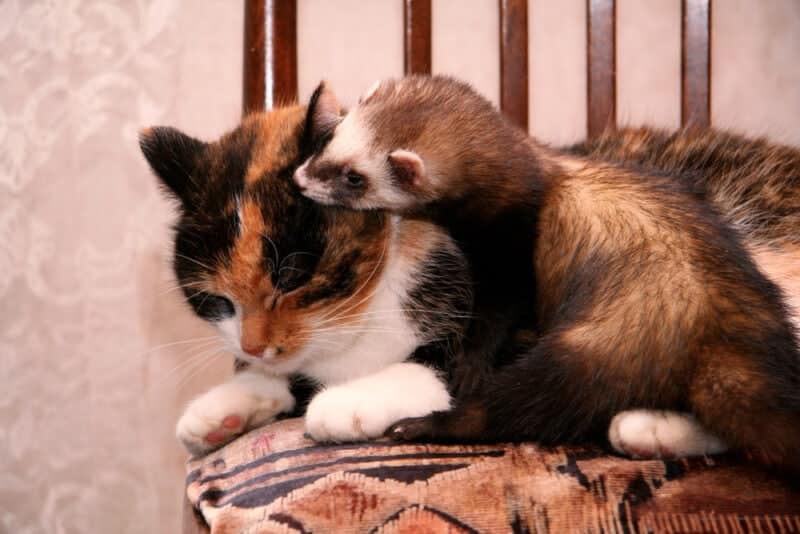
A welfare assessment in multi-pet homes found that most cats maintained normal eating, grooming, and litter-box habits within two weeks of a ferret’s arrival. Cats provided with high perches and private rooms showed the quickest adaptation.
Conclusion
Whether a ferret might injure a cat hinges on temperament, training, and the owner’s management style. Serious attacks are exceptional, but scratches or nips can happen when either pet feels crowded. Thoughtful planning keeps the odds of trouble extremely low.
To keep the household calm:
– Introduce youngsters of both species early, slowly, and under supervision.
– Watch every interaction until you are confident both animals are relaxed.
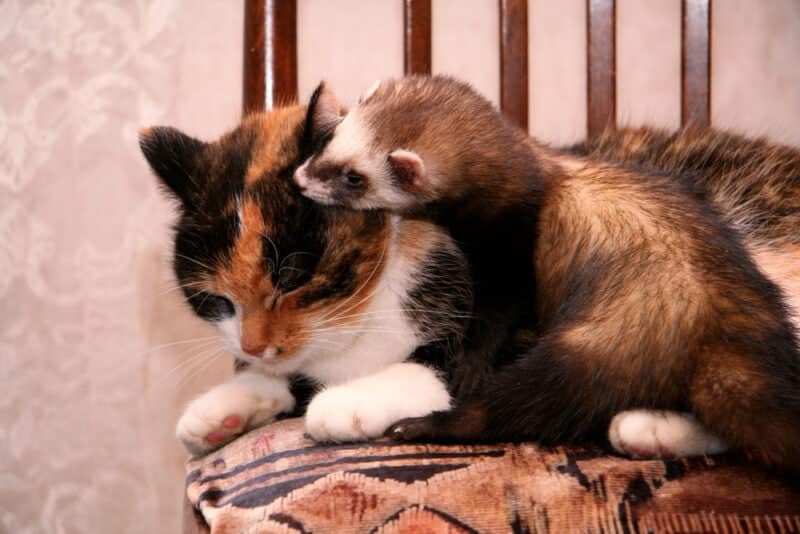
– Offer separate feeding stations, litter areas, and hiding spots.
– Seek advice from a vet or certified trainer if either pet shows chronic stress.
With patient introductions and ongoing supervision, cats and ferrets can share a home safely, often developing entertaining friendships that enrich the entire family.